Giorgio Luparello’s mental breakdown and grief
The Shape of WaterGiorgio’s mental breakdown and grief are the human aftermath of Silvio Luparello’s death: an attachment that had shaped his life becomes, after Luparello’s death, a source of disorientation, desperate concealment, and violence. The novel presents Giorgio’s collapse through reports from his family and Salvo Montalbano’s later account to Livia, while his final crash gives that prolonged grief a fatal ending.
Identity and Background
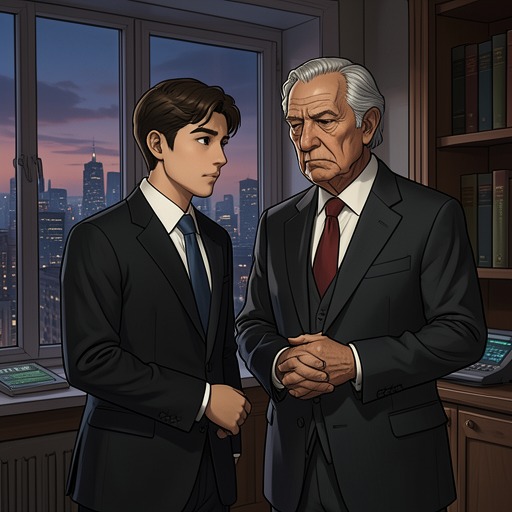
Giorgio is Luparello’s nephew and, in Montalbano’s account, the young man whose affection for his uncle had become love and passion. Before his father’s death, Giorgio lived at Luparello’s house. He then moved back to his mother’s home because he felt uneasy there without his father. That domestic change establishes how closely his sense of security was tied to the older man’s presence.
The family’s description of Giorgio after Luparello’s death is stark but not clinical. His aunt says he had been out all night and returned around nine in the morning in a pitiful state. A doctor gave him a sedative, and he was still deeply asleep when the family explained why he could not keep a planned appointment with Montalbano. Later, Montalbano describes Giorgio as living in a state of almost constant derangement after his father’s death, taking too many tranquillizers and sedatives. The account makes the grief prolonged and debilitating, rather than a single outburst.
Grief and the Attempt to Protect Luparello
Giorgio’s first decisive response to Luparello’s death is an attempt to preserve his uncle’s public image. The two men had met in a bachelor flat at Capo Massaria headland, where Luparello died during their final tryst. Afraid of scandal, Giorgio dressed the body as best he could and dragged it to the car, hoping to leave it somewhere else. Montalbano’s account emphasizes that Giorgio feared damage to his uncle’s image and memory, not exposure of himself.
The concealment began to fail when Giorgio realized that a dead man in the car would be recognized for what he was. He tried to make the body appear to have been in an accident by putting his own neck brace on the corpse and hiding it with black cloth. The effort was improvised and driven by panic. Giorgio also feared that he might suffer an epileptic fit, a condition he had, as he tried to manage the body and the journey. His distress thus appears alongside a specific bodily vulnerability; the account does not reduce his collapse to a diagnosis, but shows illness and panic compounding an already desperate situation.
Betrayal and Violence
Giorgio phoned Pietro Rizzo, who understood that Luparello’s death could be turned to political advantage. Rizzo’s manipulation eventually implicated Ingrid Sjostrom through a fabricated scandal involving her, her husband Giacomo, and Dr Cardamone. When Giorgio saw photographs and understood that Rizzo had betrayed both him and Luparello’s memory, his grief became rage. Montalbano describes his despair as heartrending, then recounts how he ran to the house at Capo Massaria headland, took Luparello’s pistol, tracked Rizzo down, beat him severely, and shot him at the base of the skull.
The murder is not followed by Giorgio’s arrest. Montalbano tells Livia that he withheld his conclusion from his colleagues in Montelusa, who believed, plausibly in his view, that the Mafia had killed Rizzo. His silence leaves Giorgio outside the official account of the murder, even as it marks the extreme consequence of the young man’s grief and Rizzo’s betrayal.
Final Decline and Narrative Significance
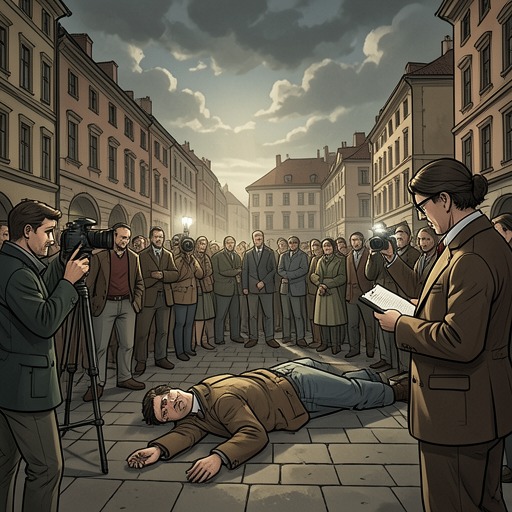
After Montalbano’s departure, Giorgio did not return. His family alerted the police and the Italian Carabinieri the following morning, but the searches were superficial; the investigation into Rizzo’s murder may have diverted attention. On Sunday afternoon, a fisherman saw a car among the rocks below the San Filippo bend, just before Capo Massaria headland. He rowed toward it, found a body in the driver’s seat, and reported it.
The crash was attributed to Giorgio’s speed and impaired condition. Instead of taking the curve, he continued straight through the small guard wall. The account connects his death to his near-constant derangement and use of tranquillizers and sedatives, and his family again explains his state through his passionate attachment to Luparello. The relative’s insistence on naming that attachment as both passion and love gives the grief a final, precise shape, even as it cannot explain away the crash or restore the dead.
Giorgio’s story also completes a chain of concealment that began with the attempt to protect Luparello’s memory. The neck brace first served as part of Giorgio’s hurried deception; after Giorgio’s death, Montalbano took it from his car and sank it in an artificial lake. The object links Giorgio’s panic to Montalbano’s own decision to suppress evidence. Through Giorgio, private mourning becomes inseparable from public scandal, political opportunism, and the compromised choices of those who survive.